
An Incomplete History of Curling in Montana
September 2026
Curling has a long, if sometimes interrupted, history in Montana. More than a century ago, Montana was home to two of the most prominent curling clubs in the American West: the Butte Curling Club and the Anaconda Curling Club. At their height, the clubs attracted hundreds of members, hosted major bonspiels, competed throughout the United States and Canada, and produced curlers who even travelled to Scotland to compete on the sport's historic home ice. The story of Montana curling, however, has never been a straight line. Clubs have formed and disappeared, rinks have opened and closed, and generations of curlers have sometimes had to cross an international border simply to find a sheet of ice. Yet the sport has repeatedly found its way back. This is an incomplete history of that journey.
The Butte Curling Club
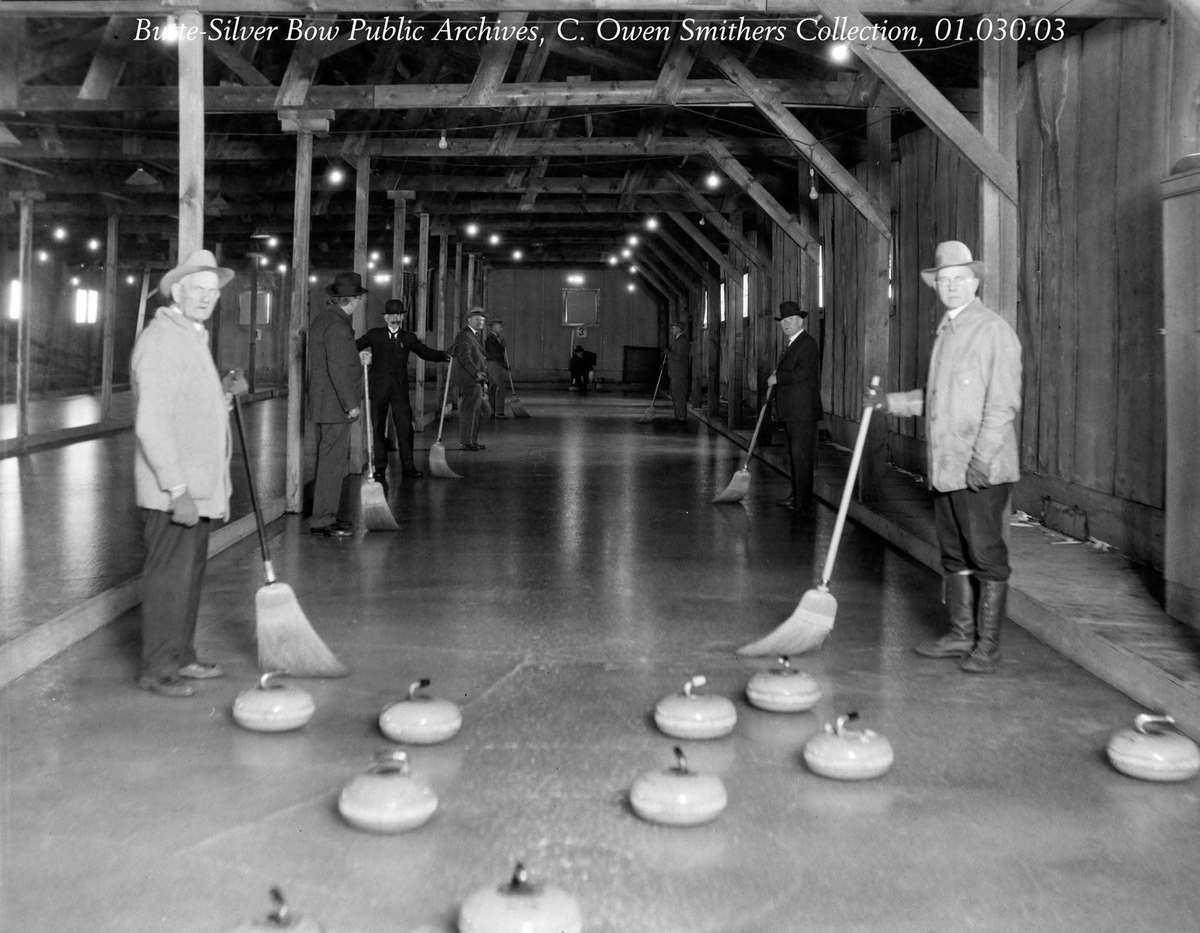
The Butte Curling Club was founded in August 1905, during a period when Butte was one of the largest and most cosmopolitan communities in America. The club held its first matches on December 5, 1905, at the Holland Ice Rink. By 1909, the club had an impressive facility for the time, with its own clubhouse alongside three covered sheets of ice, a viewing gallery, kitchen, and dining room. Curling quickly attracted many members of Butte's local Scottish diaspora, as well as some of the city's prominent businessmen and professionals. Many of the club's early members were experienced athletes, although only some had previous experience with curling. The club grew rapidly, reaching 150 members in 1906 before settling at around 80 by 1915.
From the beginning, curling in Butte was about more than the game itself. It was a social institution, a competitive sport, and a way of building community during the long Montana winter. One of the club's traditions involved matches in which the prize was a 100- to 200-pound sack of flour, with the flour donated to the poor through the Salvation Army and the losing side paying for the prize. These charitable matches became an annual tradition, often taking place around the Holidays. The club's banquets were similarly well known, featuring Scottish food, humor, rivalry, and good-natured banter. Once curling took hold in Anaconda, curlers from that city were frequent participants, while invitations were extended to other prominent members of Montana society.
Butte's ambitions extended beyond its own rink. In 1906, the club joined the Manitoba Branch of the Royal Caledonian Curling Club, strengthening its connection to the wider curling world. Two Butte teams travelled to Winnipeg for the organization's major bonspiel in 1907, and Montana teams would continue travelling to major competitions throughout the region in the years that followed.
Butte and the Montana curling circuit
By the late 1900s, Butte had established itself as one of the leading curling centers in the American West, alongside clubs in Duluth, St. Paul, and Minneapolis. Butte teams regularly competed for major trophies, including the Goodale and Leys Cups, while curlers travelled to bonspiels throughout the United States and Canada. Curling was also spreading to other Montana communities. A state bonspiel was organized for President's Day in February 1908, bringing together four Butte teams, two teams from Anaconda, and one team each from Great Falls and Missoula.
The Missoula team was skipped by A. D. MacDougall, a veteran curler with approximately 35 years of experience. His teammates were Dr. B. C. White, O. H. Ulm, and Natt MacDougall, all workers associated with construction of the St. Paul Pass Railway Tunnel. The Missoula team first faced the Matthewson rink from Anaconda and were defeated after what contemporary accounts described as a desperate struggle. The loss was jokingly attributed to the distraction caused by Matthewson's Tam o' Shanter (a traditional Scottish wool bonnet). Despite the defeat, Missoula reached the final, where they faced the Butte McMillin rink and lost 14–6. MacDougall's reputation evidently survived the defeat, and later that year he was made an honorary member of the Butte Curling Club. The 1908 bonspiel was also significant for another reason: shortly afterward, the Anaconda Curling Club was formed.
The Anaconda Curling Club
The Anaconda Curling Club was organized in 1908 with 168 members, immediately establishing itself as a major force in Montana curling. Anaconda's first rink opened that same year, with A. D. MacDougall's team throwing the first stones. The club's facilities were later expanded, and in 1913 a new four-sheet rink was constructed on Lower Hickory Street. The new facility was regarded at the time as one of the finest curling rinks in the Northwest, with four sheets of ice laid over concrete flooring.
With the creation of the Anaconda club, a natural rivalry developed between the two major Montana curling centers. Butte and Anaconda teams regularly competed against one another, including in contests for the Byrne Cup, while curlers from both clubs travelled to competitions farther afield. Anaconda curling also produced some of the more colorful stories in Montana's curling history. In 1908, the club's women decided to challenge what contemporary reporting described as the "worst" men's team in the club. The exact circumstances of the match are now largely lost, but the story offers a glimpse into the competitive—and playful—culture surrounding the sport. Two decades later, in 1928, the club made the newspapers for a very different reason when thieves broke into the Anaconda curling facilities and stole 80 curling brooms.
Montana on the International Curling Stage
The early Montana clubs were not isolated local curiosities. Their members were part of a much larger curling network stretching across the United States, Canada, and Scotland. Perhaps the most remarkable example was Don McMillan, one of the founding members of the Butte Curling Club. Born in Whycocomagh, Nova Scotia, McMillan brought considerable curling experience with him to Montana. He became one of the central figures in the Butte club from its establishment in 1905 and remained active for decades, serving as secretary-treasurer into at least 1930, when he was 69 years old.
McMillan's curling career eventually took him far beyond Montana. In 1909, the Royal Caledonian Curling Club arranged a tour of Scotland for Canadian curlers. The touring party included several American curlers, among them Don McMillan of Butte and A. D. MacDougall, the veteran curler who had skipped the Missoula team at the 1908 state bonspiel. The Canadian-American team had an extraordinary tour, winning 23 of 26 matches. The trip reached an even more remarkable conclusion when the curlers were received by King Edward VII at Balmoral Castle. For a sport that had only been formally organized in Montana a few years earlier, the connection was extraordinary.
The Decline of Organized Curling
The early success of Butte and Anaconda did not last forever. By the late 1920s and in the decades that followed, organized curling in Montana began to decline. The precise reasons are difficult to establish from the surviving record, but the clubs that had once attracted hundreds of members eventually disappeared. The economic and demographic changes affecting Montana communities, the changing fortunes of Butte and Anaconda, the difficulty of maintaining dedicated curling facilities, and changing recreational habits all likely played a role. Montana then entered a long period in which it no longer had the network of established curling clubs and rinks that had existed at the beginning of the century.
But the sport did not disappear completely. Instead, it survived in a much more informal form, carried on by individual curlers and families who were willing to travel wherever they could find ice.
Curling in Northern Montana
One of the most interesting links between Montana's early curling history and its later revival came through the Linnell family. Around 1945, Saskatchewan curler Herbert Linnell moved to Sunburst, Montana, with his three sons, Earl, Melvin, and Edward. Herbert had been curling since 1898, when he learned the sport from his father and brothers in Regina. With no established curling club nearby, the Linnells crossed the border into Alberta to compete, becoming known as the Sunburst Curling Club despite doing most of their curling in Canada.
The family quickly made a name for itself. In 1948, the younger Linnells won a bonspiel in Warner, Alberta, after ten consecutive victories and continued travelling to Canadian bonspiels in the years that followed. In 1951, Herbert moved to Kalispell at the age of 69, where he was believed to be the oldest active curler in the United States at the time. The family continued competing in Alberta, winning the grand aggregate at the Taber bonspiel in 1952 and again the following year. They also won the Lumberman's Trophy at Lethbridge with a 10–2 record, with their final match broadcast on the local CJOC radio station. For several years, various members of the Linnell family kept Montana curling alive by travelling north across the Canadian border to compete.
Kalispell Picks Up the Broom
The Linnells were not the only curlers keeping the sport alive in northwest Montana. A group of local enthusiasts, including Grant Prestbye and Dr. Edson Curry, began travelling to Creston, British Columbia, to practice on artificial ice before competing in the Creston Butterfly Bonspiel in 1956. Kalispell curlers continued travelling to British Columbia throughout the 1950s and 1960s, frequently becoming the only American representatives at BC bonspiels. They were not merely making up the numbers: on one occasion, a Kalispell team recorded a memorable 19–5 victory over a Calgary team. In 1957, Kalispell hosted the Fernie Curling Club for a public exhibition match, bringing Canadian curling across the border for an audience at home.
The tradition survived into the 1970s. A team of novice Kalispell curlers entered the Fernie Bonspiel in 1972, where they quickly discovered the difference between being able to throw a stone and being able to compete against experienced Canadian curlers. The Montana team lost one match 28–1 to a team of bus drivers. Afterwards, their opponents reportedly asked, "You chaps come up to bonspiel rather than curl, eh?"
The Return of Curling
For much of the 20th century, Montana's curling history existed in fragments. There was no statewide network of established clubs comparable to the one that had existed at the beginning of the century.
That eventually changed. In the fall of 2009, John Hoepfer posted a flyer around Whitefish asking whether anyone was interested in starting a curling club. After three meetings at the Great Northern Brewery, the Whitefish Curling Club was born. A year later, curling returned to Missoula with the formation of the Missoula Curling Club.
Today, Montana is home to organized curling in communities such as Butte, Billings, Havre, Bozeman, Helena, Great Falls, Missoula, and Whitefish, with curlers travelling throughout the region to compete in bonspiels and playdowns. Modern Montana bonspiels, such as the Big Sky Bonspiel and Philipsburg Outdoor Bonspiel, draw curlers not only from across the state, but from throughout the United States and Canada. What was once a sport concentrated in a handful of mining communities has once again become a statewide curling community, with hundreds of curlers participating across Montana.
A Tradition Renewed
The modern Montana curling community is, in many ways, remarkably similar to the one that existed more than a century ago. The early clubs valued competition, but they also valued friendship and community. They travelled to bonspiels, welcomed newcomers, maintained connections with Canadian and Scottish curling traditions, raised funds for local causes, and held social events where victories were celebrated, defeats were laughed about, and good-natured rivalry was as important as the result on the scoreboard. Those traditions have survived even as the places and people have changed.
The names of the early Montana curlers—McMillan, MacDougall, Linnell, and many others—are now largely forgotten outside the historical record. Their rinks are gone, their clubs disappeared for generations, and much of their story remains waiting to be uncovered in old newspapers and archives. But the game they played has returned.
More than 120 years after the first stones were thrown on the richest hill in the world, Montana once again has a growing community of people who enjoy getting together to slide Scottish granite down sheets of ice.
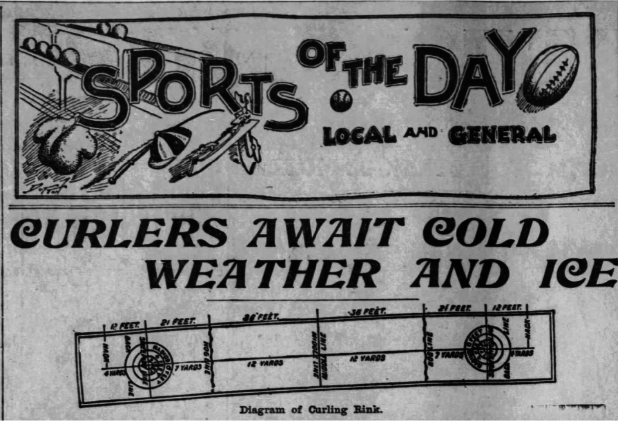
This incomplete history was compiled by D.M. (Missoula) primarily from historical newspaper archives, particularly the Butte Miner, Anaconda Standard, Independent Record, and Daily Inter Lake, as well as materials from the Butte-Silver Bow Public Archives and the Verdigris Project’s “Butte: America’s Story — Episode 62: Curling Club.”